ApoKrino Forge
Forge helps you develop ideas from your own sketchbook and process.
ApoKrino ideation software
Forge and ApoKrinoGo help you look across the work you have already made, notice what is forming, and decide where to take it next. They analyse your work — never generate it for you.
Explore Forge · Open ApoKrinoGo
Most creative software starts after you've decided what to make. ApoKrino works on the step before that.
Forge helps you develop ideas from your own sketchbook and process.
ApoKrinoGo uses AI to analyse the patterns already present in your work — without generating the work for you.
You remain the artist. The AI helps you see, compare and decide.
Forge and Go were designed from a human-capacity-first philosophy, not a rule-compliance-first one — built to preserve human authorship, original process, and evidence of thinking, so your work fits the strictest common portfolio-AI expectations.
Inspiration → Ideation → Execution
ApoKrino: looking, developing, comparing, narrowing, deciding
Procreate, Adobe, final-production tools
For a screen-free way to move the work forward, choose the practice that names what is in the way, print it at home, and carry it with you.
Work with Trevett
For a one-to-one conversation about what you're making — or not making — work with Trevett online, one hour at a time.
It rarely announces itself. You stay busy, but less and less of what you make feels like you. Ideas pile up unfinished. Deadlines, clients, school or new tools start deciding what gets made, and the thing you care about keeps moving to next week.
It isn't a talent problem, and more discipline rarely fixes it. It's misalignment: the work you're doing and the work that's yours have drifted apart.
It might look like this:
You don't need to name it precisely. Tell me what it looks like for you — that's where we start.
Book an hour — €150 · Online, by video. For students under 18, a parent or guardian books.
We're social creatures, and everything we show the world is a translation of who we are. The new tools have made that harder: they've taken the driver's seat, and authority seems to live everywhere except inside us. But who you are is the only authority that can shape the work that's yours.
Most of us end up doing too much that doesn't fit. The self that fits is still there — the offer to be you is still on the table where you left it.
I don't have your answers. You do, even if you can't see them yet. The stuck feeling that brought you here isn't who you are. I can help you back into the driver's seat, reconnect you to a creative process that fits, and, if you want, coach you through the project.
I didn't get out of my own rut alone — we're social creatures; that's how this works. When you're tired of that feeling, book an hour.
No admission guarantees. No AI-generated artwork. The ideas and the work stay yours.
25+ years of teaching, including a year at the Smithsonian. Students have gone on to programmes including RISD, SAIC, UPenn and Stanford. Trevett Allen teaches ideation as a practice, not a promise.
“Trevett helped guide my ideas to become extremely more concise and cohesive. He also guided my process to balance experimentation and clean product across several media. My identity became visible in my successful RISD application portfolio.”
“Trevett always encourages me to take my time and fully develop and expand on my ideas such that I can maximise my full creative and analytical potential. I am grateful for everything Trevett has done, and I surely look forward to working with him again.”
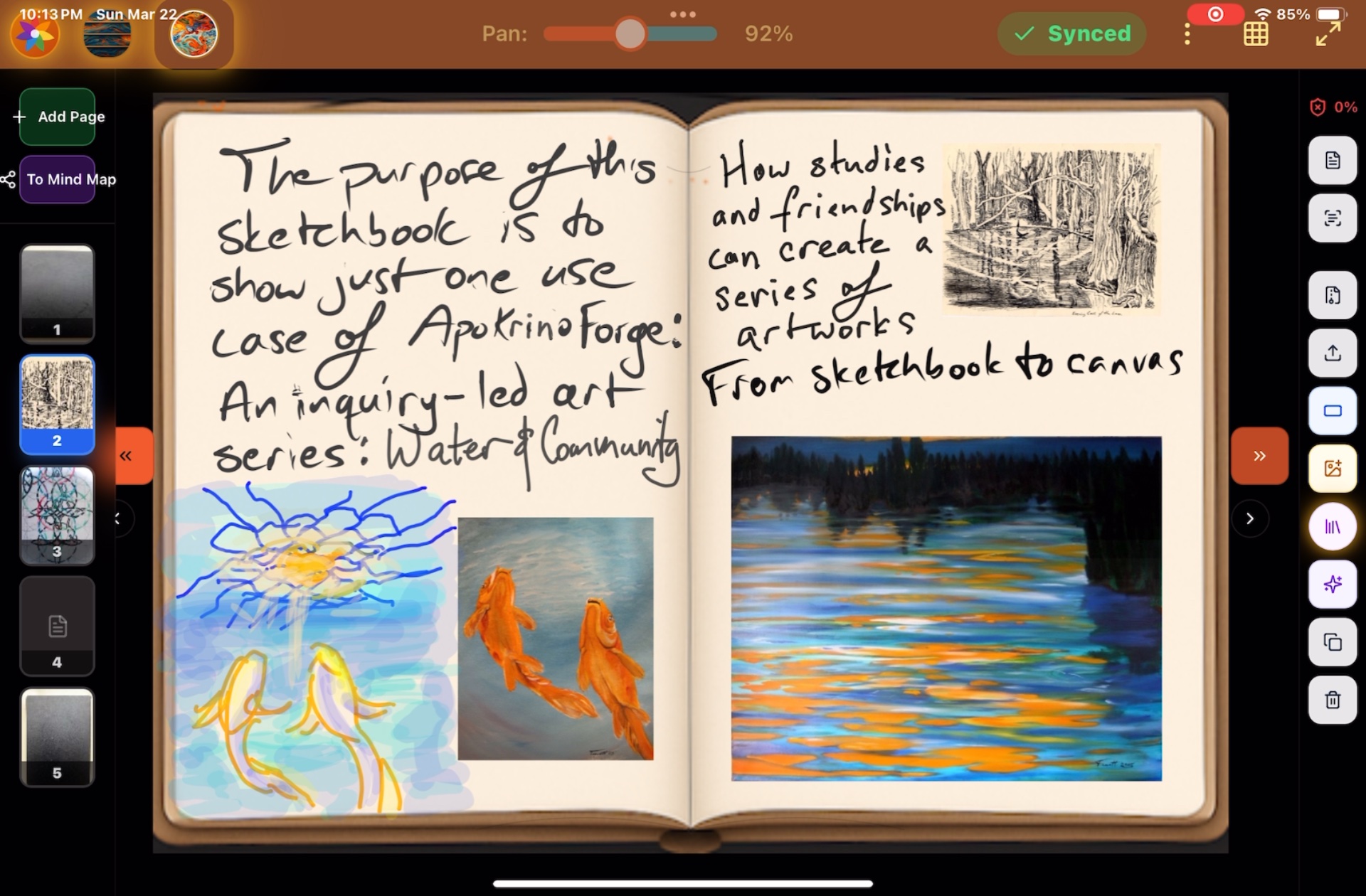
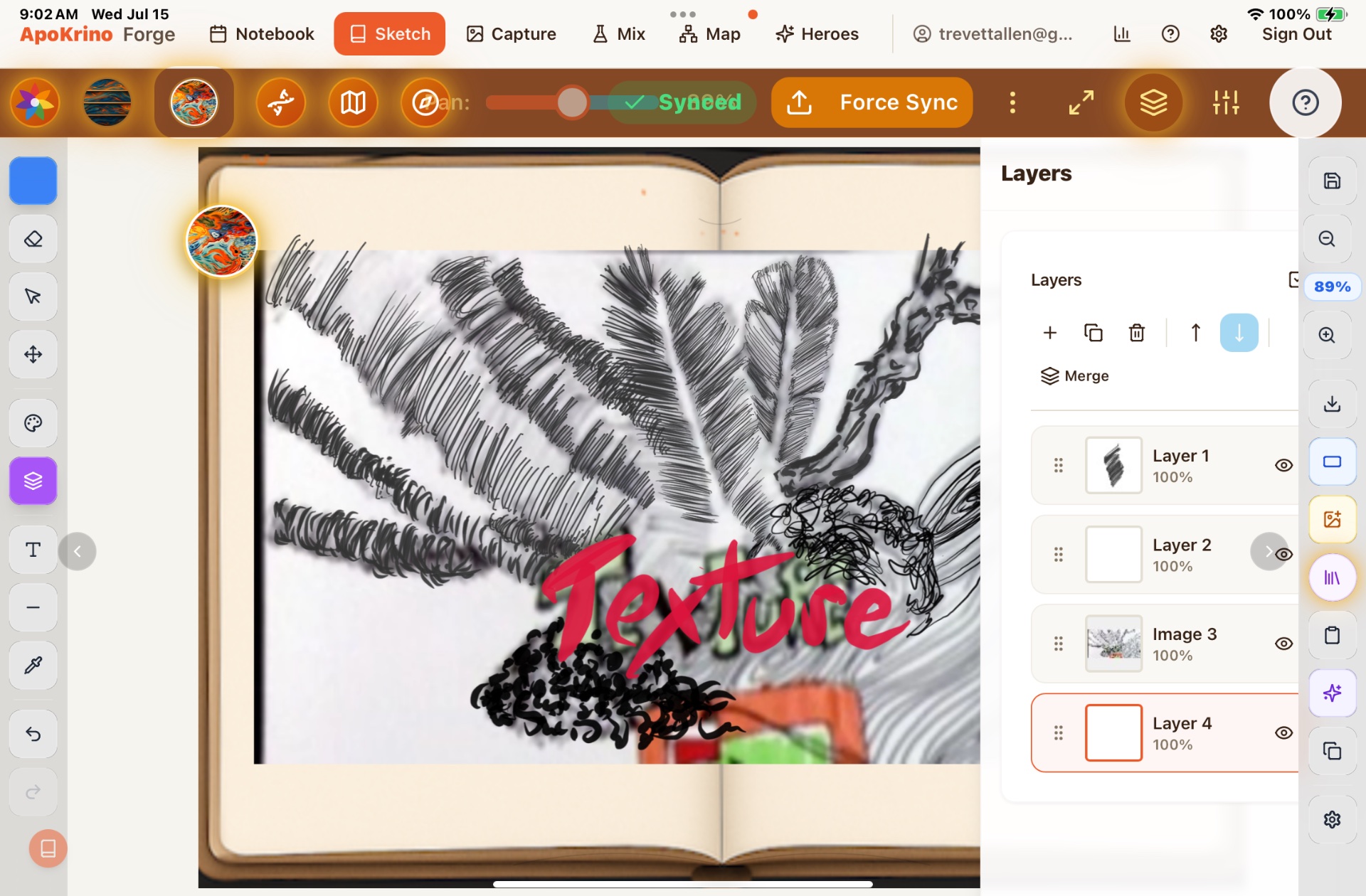
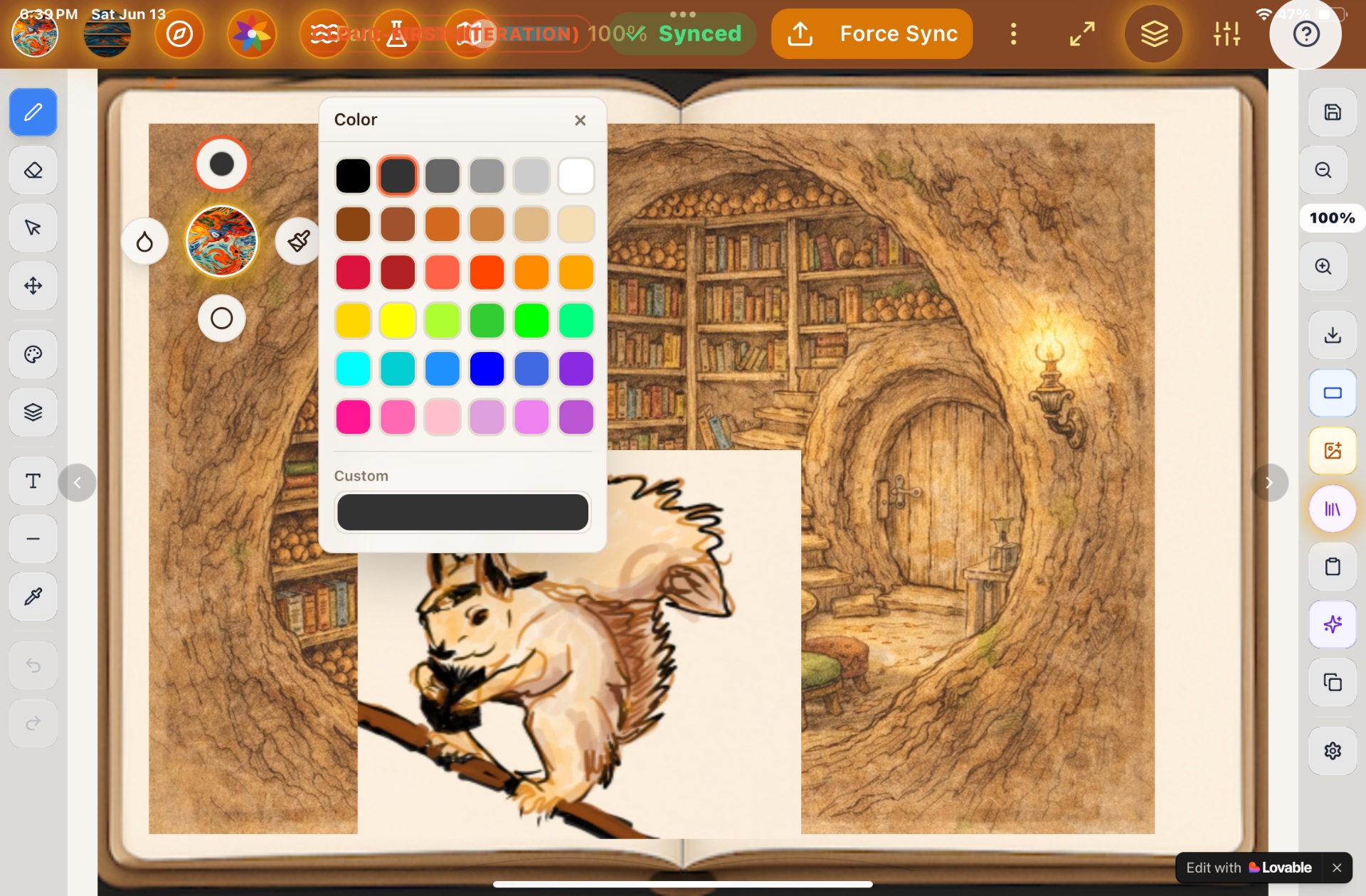
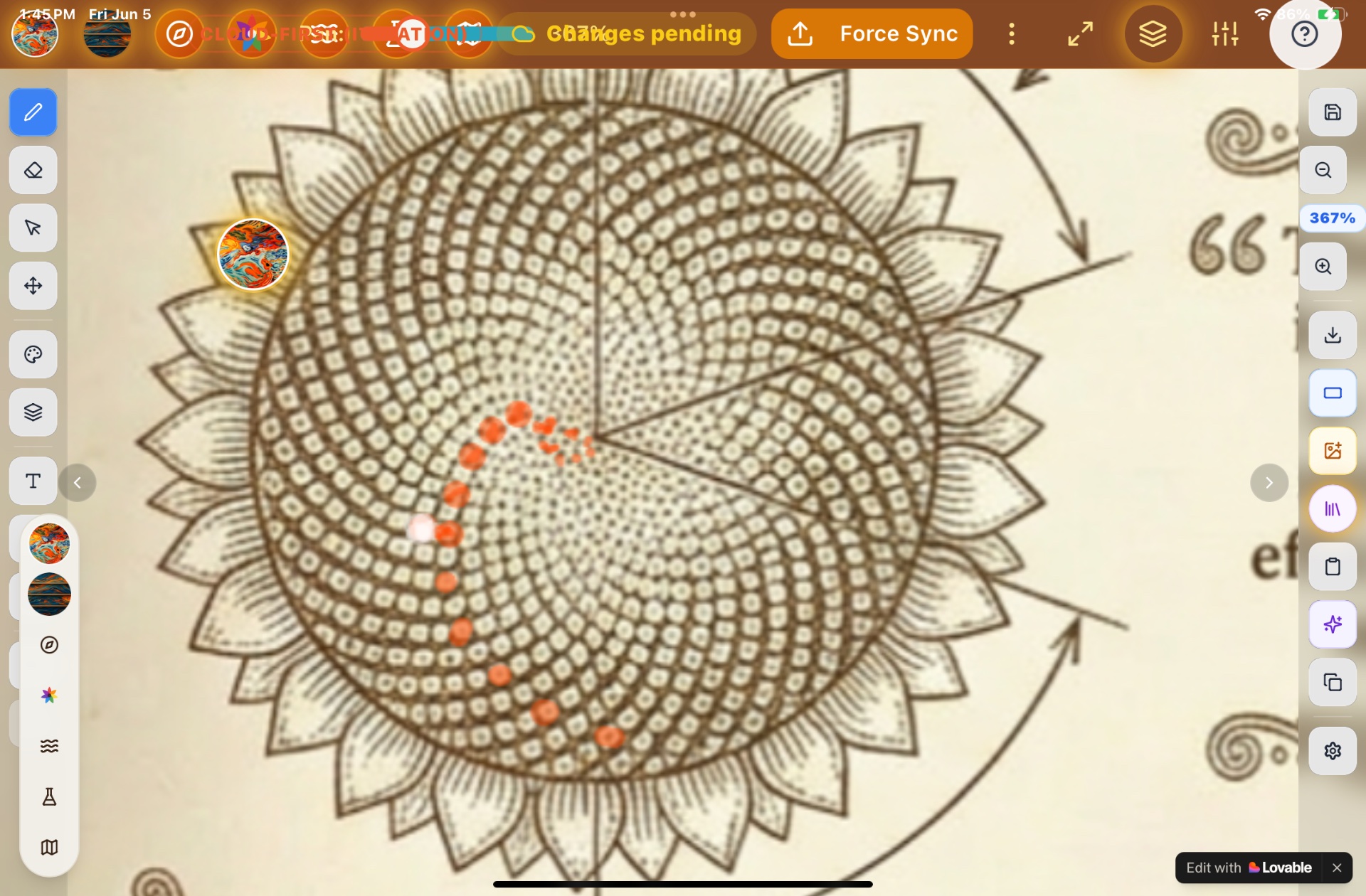
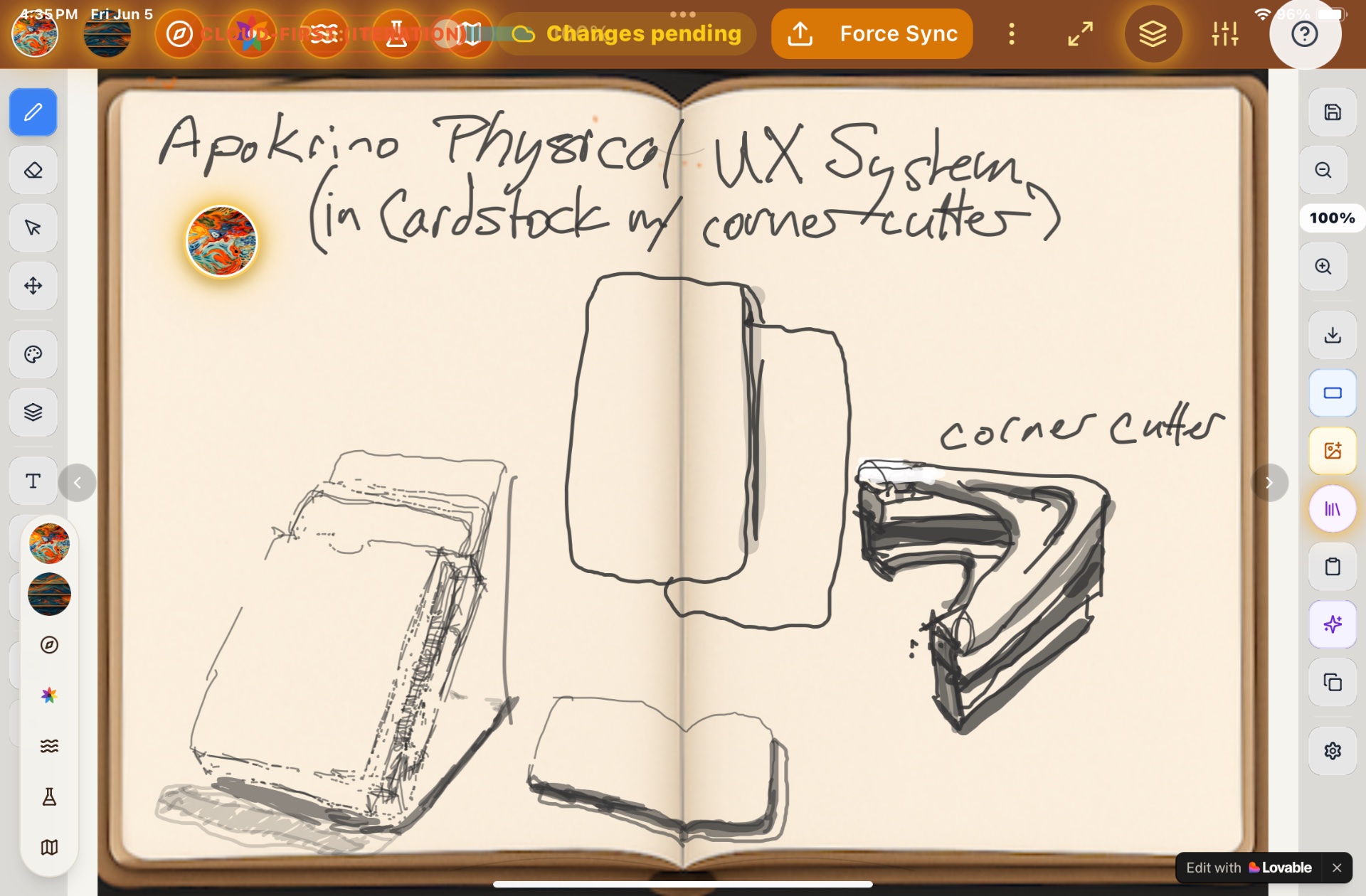
Real pages from real sketchbooks. Each one shows a single move you can make with your own work.
It's the drift between the work you're doing and the work that's yours. You stay busy, but less of it feels like you; ideas pile up unfinished; deadlines, clients, school or new tools start deciding what you make. It isn't a talent problem. It's a direction problem — and it's what the hour is for.
Stop asking the block for finished work. Go back to the sketchbook with no portfolio in mind, read across your recent pages for what keeps returning, and make one small thing from it. If you've been circling for months, an outside eye helps — it's hard to see your own pattern from inside it.
Read more: Creative block recovery
Usually you haven't lost the skill. More often you've outgrown the subject, started judging too early, or lost contact with what the work was for. The way back starts with low-stakes drawing and a slow read of what you made before.
Smaller than feels useful: ten minutes, one page, no audience. Motivation tends to follow contact with the work rather than come before it. In a session we start with what you made before, and with what stopped you.
Don't rank the ideas — read them. Lay them side by side and look for what they share; the thread that runs through several is usually the one worth building. Choose the smallest version you can finish, and set the rest down for now.
You don't invent it; you find it in work you've already made. Draw consistently, then read across many pages for the marks, subjects and questions that keep returning. Copy artists you love to learn their decisions, then go back to your own pages.
Read more: How to find your art style · How to study master artists
Often direction. If your work has stopped improving despite steady practice, the practice has probably stopped asking a new question. Technique serves an inquiry; without one, more hours tend to reinforce what you already do.
Draw from observation every day, copy one master slowly for a month, and read back across your own pages every few weeks. Improvement shows up as a wider range of marks and longer attention on each subject.
Read more: How to get better at drawing
Treat it as a thinking system, not a place to store finished drawings. Work in it without an audience, then read back across the pages: what recurs is the material for your next project. It's the method underneath everything here.
Read more: Sketchbook Thinking, the method
They can, when they start deciding what you make. Use tools for what they are good at, and keep the choosing — what to make, and why — in your own hands. Nothing here generates artwork for you; the work stays yours because the decisions do.
Read more: Human-first AI principles
Usually because it's organised around what portfolios are supposed to look like, rather than what you keep coming back to. Schools like RISD ask to see your thinking as well as your making. Find the question your work already circles, then build and sequence around it.
Read more: Art school portfolios
Evidence of how you think as well as how you make: ideas, curiosity, experimentation and observation. RISD, for example, asks for 12–20 recent works ‘showcasing your thinking and making’ and recommends drawing from direct observation. Requirements change, so check each school’s current guidelines.
Coherence usually takes 12–24 months of sustained practice, and a last-minute portfolio tends to look last-minute. Later starts can still work: we begin with whatever already exists.
Yes. The IB art-making inquiries portfolio, the A-Level Personal Investigation and the AP Sustained Investigation all reward the same thing: a real question, pursued over time. I help students find theirs. The work and the writing stay theirs.
Read more: IB Visual Arts · A-Level Personal Investigation · AP Art & Design · MYP & PYP
Yes. Sessions are online and scheduled around after-school hours in Asia and evenings in Europe. I've taught in international schools in Hong Kong and Spain.
Read more: International school families
€150 for one hour, one-to-one, online. If you want to keep going, further sessions are the same rate. There are no packages.
Read more: Book an hour
Whatever exists: sketchbooks, files, photos of unfinished things, notes — or a few lines about where you're stuck. Nothing needs to be finished, and nothing needs to be good.
You get a short written note: what matters, what to set down, and the next thing to make. If you want to keep going, I'll coach you through the project — an hour at a time, at the same rate.
No. It's a working session with an artist and teacher, about your work and what to make next. If you're carrying something heavier than a creative block, a therapist is the right first call — this can sit alongside that, not replace it.
Yes, including students preparing art and design portfolios. For students under 18, a parent or guardian books and is welcome to join.
English. Spanish or French are also possible.
Yes — free, up to 24 hours before. Email [email protected].
It's Greek. Apokrinō means to tell apart. In the middle voice — where the one acting is also affected by the act — apokrinomai means to answer. It's the name I gave to the way I've taught for more than 25 years: find what's yours in the work, answer it with the next piece, and let the work change you as you go.
Book an hour. Tell me what it looks like for you, and we'll start there.
Book an hour — €150 · Online, by video. For students under 18, a parent or guardian books.